
Legal AI News: What Your Attorney Wants You to Know About Using AI for Legal Advice
Legal AI News – AI platforms like chat gpt, perplexity, grok & others can feel like a private sounding board. They’re not. Here’s what that means if you end up in court.
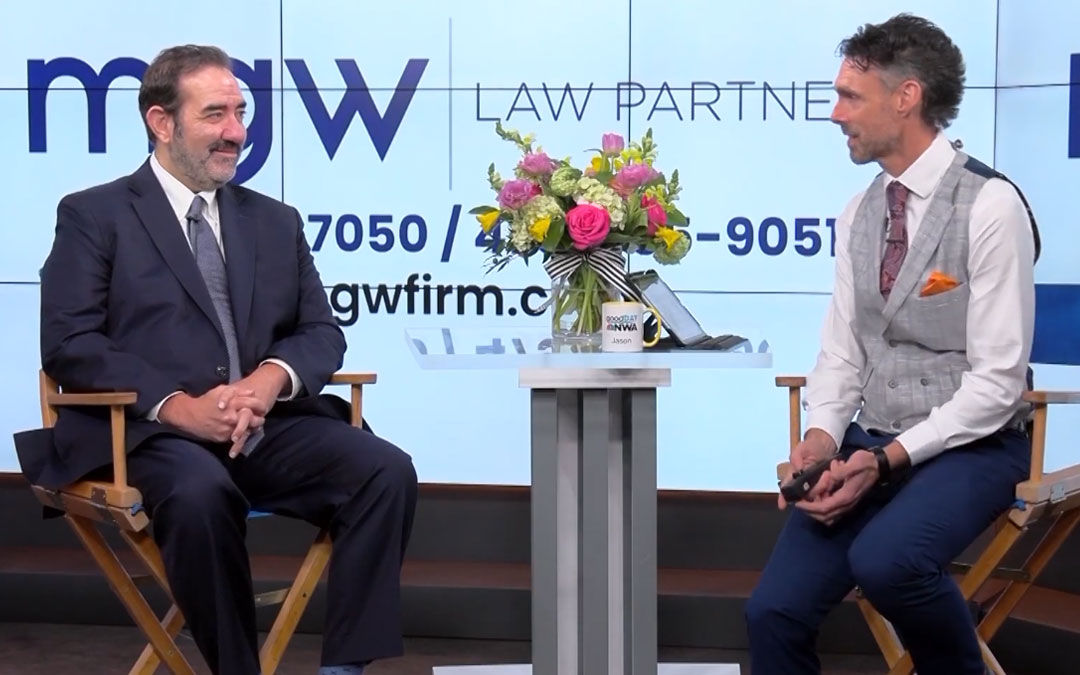
By Tim Watson, Attorney at MGW Law Partners Fayetteville, AR
Legal AI News: The Gap Between “Helpful” and “Protected”
“Confidentiality has value. There is a reason for it. There is a reason you want to go and hire an attorney and be able to talk to somebody.” — Tim Watson, Attorney, MGW Law Partners

Legal AI News: A Real Case That Should Give Everyone Pause
His attorney tried to fight it. Couldn’t. Because those conversations weren’t privileged in any way. They were just records that a company held, and the government had a right to get them.

Legal AI News: What About Civil Cases?
So Does This Mean You Shouldn’t Use AI at All?

Legal AI News: A Glimpse at Where This Might Be Going
Frequently Asked Questions
Are my conversations with ChatGPT or Claude protected by attorney-client privilege?
No. Attorney-client privilege only applies when you are communicating with a licensed attorney you have formally hired. AI chatbots like ChatGPT and Claude are not attorneys, and there is no legal protection covering what you share with them. Those conversations could potentially be accessed and used as evidence in legal proceedings.
Can my AI chatbot conversations be used against me in court?
Yes. A federal court case out of New York showed exactly that. A criminal defendant’s conversations with an AI chatbot were discoverable because they were not protected by any privilege. The government was able to access those communications and introduce them as evidence, even over the defendant’s attorney’s objections.
Should I stop using AI for legal questions entirely?
Not necessarily. AI can provide general information, but if you are involved in or anticipate being involved in a legal case, you should treat anything you share with an AI the same way you’d treat a conversation with a stranger on the street — with the awareness it may not stay private.
Does this issue only apply to criminal cases, or does it affect civil cases too?
Both. While a notable case on this issue came out of federal criminal court in New York, the concern extends to civil litigation as well. In civil cases, discovery rules allow the opposing party to request relevant communications. The lack of privilege protection around AI chatbot conversations means the risk applies in any legal proceeding, not just criminal matters.
What should I do instead of using AI when I have a legal issue?
Call a licensed attorney. When you hire an attorney, your conversations are protected by attorney-client confidentiality — a legal protection that does not exist when you talk to an AI chatbot. An attorney also brings professional judgment and experience in the specific area of law that applies to your situation, something no AI can replicate.
What is the main risk of sharing details about my legal situation with an AI chatbot?
The main risk is that those communications are not privileged and could be subpoenaed or obtained through discovery. Unlike conversations with your attorney, there is no legal shield protecting what you tell an AI chatbot from being disclosed to opposing counsel or the government. As one real case has already shown, even damaging admissions shared with an AI can end up as courtroom evidence.
Does it matter which AI platform I use — is one safer than another?
From a legal privilege standpoint, no. Whether you’re using ChatGPT, Claude, Gemini, or any other AI chatbot, none of those conversations are protected by attorney-client privilege. The platform doesn’t change the underlying legal reality: you are sharing information with a third-party service, not a licensed attorney bound by confidentiality.
What if I only asked the AI general questions and didn't share anything specific about my case?
General research questions carry much lower risk than sharing case-specific details. The concern becomes significant when you start describing your actual situation — facts, timelines, your role in events, what you did or didn’t do. That’s the kind of information that has value to an opposing party and that you would normally only share with your attorney.
Can my attorney see what I've already told an AI chatbot before hiring them?
Your attorney can absolutely talk through what you’ve shared with an AI and help you understand any potential exposure. Being upfront with your attorney about prior AI conversations is important precisely because attorney-client privilege protects those discussions with your lawyer — and your attorney needs the full picture to advise you properly.
Is this just a concern for people who are already in trouble legally, or should everyone be careful?
This article is provided for informational purposes only and does not constitute legal advice. Laws and legal interpretations vary by jurisdiction. For advice specific to your situation, consult a licensed attorney in your area.